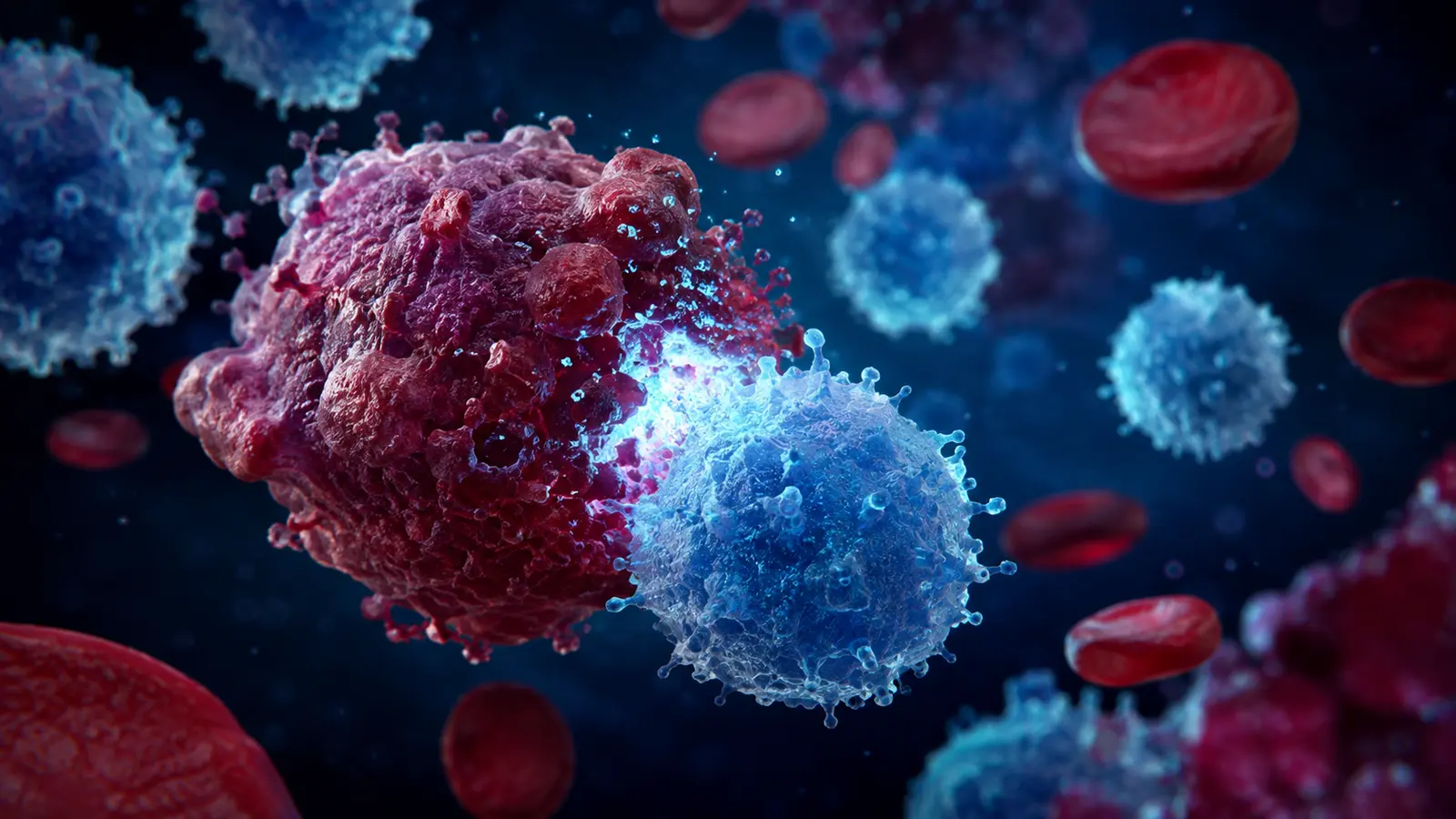
CAR-T cell therapy is the first curative cell immunotherapy successfully commercialized worldwide. Unlike solid tumors, CAR-T has achieved mature and remarkable clinical outcomes in hematological malignancies. Hematological cancers mainly include B-cell acute lymphoblastic leukemia (B-ALL), B-cell non-Hodgkin lymphoma (NHL), mantle cell lymphoma (MCL) and multiple myeloma (MM). For patients with relapsed/refractory (R/R) disease who fail multiple lines of chemotherapy, targeted therapy and hematopoietic stem cell transplantation, CAR-T brings long-term remission opportunities.
To date, multiple CD19-targeted and BCMA-targeted autologous CAR-T products have been approved globally. This article systematically sorts out core targets, landmark clinical trial data, safety profiles, existing limitations and cutting-edge research trends.
Core Targets for CAR-T in Hematological Malignancies
CD19 (Target for B-cell malignancies)
CD19 is expressed on almost all mature B cells and B-lineage tumor cells. It is the most well-established target for CAR-T therapy.
Applicable diseases
R/R B-ALL, diffuse large B-cell lymphoma (DLBCL), follicular lymphoma (FL), primary mediastinal large B-cell lymphoma, mantle cell lymphoma
Strength
High positive rate in B-cell tumors; expression absent on hematopoietic stem cells
Limitation
Tumors may lose CD19 antigen after treatment, leading to antigen escape relapse
BCMA (B-cell Maturation Antigen, Target for Multiple Myeloma)
BCMA is highly expressed on malignant plasma cells.
Applicable disease
Relapsed/refractory multiple myeloma
Strength
Specific expression on plasma cells; low expression in normal tissues
Limitation
Partial patients develop BCMA downregulation after CAR-T infusion
Other Investigational Targets (Early Clinical Phase)
CD22, CD7, CD30, GPRC5D, CD123. Most candidates remain in Phase I/II trials without approved commercial products. CD7 CAR-T is mainly developed for T-cell leukemia and lymphoma.
Globally Approved Autologous CAR-T Products & Key Clinical Data
CD19 CAR-T for B-Cell Malignancies
Axicabtagene ciloleucel (Axi-cel / Yescarta, CD28 co-stimulatory domain)
Approved indication
R/R large B-cell lymphoma after ≥2 lines of therapy; second-line therapy for patients relapsed within 12 months after first-line treatment
ZUMA-1 pivotal trial
ORR 72%, CR rate 51%; median DOR 9.2 months
ZUMA-7 (second-line setting)
ORR 83% vs 50% of standard chemotherapy; significantly prolonged event-free survival
Safety feature
Higher incidence of ICANS compared with 4-1BB-based CAR-T
Tisagenlecleucel (Tisa-cel / Kymriah, 4-1BB co-stimulatory domain)
Indications
Pediatric & young adult R/R B-ALL; adult R/R DLBCL
ELIANA trial (pediatric B-ALL)
Overall remission rate 81%; long-term follow-up confirmed durable cure for partial patients
Safety feature
Relatively mild neurotoxicity profile
Lisocabtagene maraleucel (Liso-cel / Breyanzi)
Indication
R/R large B-cell lymphoma
TRANSCEND NHL 001
ORR 73%, CR rate 53%
Advantage
Balanced CD4/CD8 CAR-T composition, lower severe CRS and ICANS risk
Domestic CD19 CAR-T Approved in China
Axicabtagene ciloleucel (Axi-cel, Yikaida®)
Relmacabtagene autoleucel (Rema-cel, Benorida®)
Naxitamab autoleucel (Naki-cel, Yuanruida®)
BCMA CAR-T for Relapsed/Refractory Multiple Myeloma
Ciltacabtagene autoleucel (Carvykti)
Pivotal trial
ORR 98%, sCR rate 83%; outstanding long-term survival data
Zevor-Cel (Zevorcabtagene autoleucel, Saikaize®)
China fully human BCMA CAR-T
Phase II study (102 patients)
ORR 92.2%, sCR/CR rate 71.6%
Safety highlight
Grade ≥3 CRS only 6.9%, no Grade ≥3 ICANS
Ime-cel (Ijiocabtagene autoleucel, Fokusu®)
Domestic BCMA CAR-T, approved for R/R multiple myeloma
Safety Profile of CAR-T Therapy for Hematological Malignancies
Compared with solid tumor CAR-T (CT041 for gastric cancer), CAR-T for blood tumors has significantly higher risks of severe CRS and ICANS.
Cytokine Release Syndrome (CRS) Most common adverse event. Incidence ~70%–90% across studies.
Grade 1–2: Fever, fatigue, hypotension, hypoxia
Grade ≥3: Severe hypotension, shock, respiratory failure requiring intensive care
Onset
Usually within 1–7 days after cell infusion
Immune Effector Cell-Associated Neurotoxicity Syndrome (ICANS) Unique critical risk of CD19 CAR-T. Rare in solid tumor CAR-T. Manifestations: Confusion, aphasia, tremor, seizure, coma. Risk varies by CAR construct: CD28-based CAR-T > 4-1BB CAR-T.
Prolonged Cytopenia Neutropenia, thrombocytopenia and anemia, partially induced by lymphodepletion chemotherapy; some patients develop persistent late cytopenia.
Other Risks Prolonged B-cell aplasia, hypogammaglobulinemia, recurrent infection; secondary malignancies reported in long-term follow-up.
Standard Clinical Treatment Workflow
Patient screening
Assess disease status, organ function, eligibility for leukapheresis
Leukapheresis
Collect patient autologous peripheral T cells
Ex vivo manufacturing
Genetic modification, activation and expansion. Production cycle: 2–4 weeks
Lymphodepletion chemotherapy (Fludarabine + Cyclophosphamide)
CAR-T cell infusion
In-hospital monitoring for at least 14 days to manage CRS/ICANS
Long-term follow-up for disease remission, immune recovery and complications
Core Bottlenecks of Current CAR-T for Hematological Malignancies
Antigen escape relapse CD19 loss or BCMA downregulation is the top cause of treatment failure. Around 30%–50% patients who achieve initial remission will relapse within 2 years.
Autologous cell limitation Patients with heavily pretreated disease often have exhausted, dysfunctional T cells, leading to poor CAR-T manufacturing quality.
Long manufacturing waiting window Rapidly progressing patients may die during the 2–4 week production period.
High treatment cost
T-cell malignancies remain challenging Auto-CAR-T faces fratricide issues; available clinical data are limited.
Global Research Directions to Improve Efficacy
- Dual-target CAR-T (CD19/CD22, BCMA/GPRC5D) to overcome antigen escape
- Off-the-shelf allogeneic Universal CAR-T (UCAR-T): Ready-to-use donor-derived cells
- Next-generation armored CAR-T: Express cytokines or inhibitory receptor blockers to prevent T cell exhaustion
- Combination strategies: CAR-T + checkpoint inhibitors, monoclonal antibodies, bispecific antibodies
- CAR-T followed by consolidation hematopoietic stem cell transplantation
- Optimized lymphodepletion regimens and cell dosage design
Comparison: CAR-T Blood Tumors VS CAR-T Solid Tumors (Brief Summary)
Hematological malignancies
Mature commercial products, high ORR (60%–95%), risk of severe CRS & ICANS
Solid tumors (e.g. gastric cancer CT041): Only one approved product; moderate response rate; rare severe neurotoxicity; major barriers: tumor microenvironment, poor CAR-T infiltration

Professor Chen Tao
Attending Physician · International Medical Center
Cancer immunotherapy for solid tumours, haematological malignancies and lymphoma
Guangzhou Xinshi Hospital (Guangdong Pharmaceutical University Guangzhou Fosun Chancheng Hospital)
References
- Neelapu SS, et al. Axicabtagene Ciloleucel CAR T-Cell Therapy in Refractory Large B-Cell Lymphoma (ZUMA-1). New England Journal of Medicine. 2017;377:2531–2544. DOI: 10.1056/NEJMoa1707447
- Locke FL, et al. Axicabtagene Ciloleucel as Second-Line Therapy for Large B-Cell Lymphoma (ZUMA-7). New England Journal of Medicine. 2022;386:640–654. DOI: 10.1056/NEJMoa2116133
- Maude SL, et al. Tisagenlecleucel in Children and Young Adults with B-Cell Lymphoblastic Leukemia (ELIANA). New England Journal of Medicine. 2018;378:439–448. DOI: 10.1056/NEJMoa1709866
- Abramson JS, et al. Lisocabtagene maraleucel for relapsed or refractory large B-cell lymphomas (TRANSCEND NHL 001). The Lancet. 2020;396:839–852. DOI: 10.1016/S0140-6736(20)31366-0
- Munshi NC, et al. Idecabtagene Vicleucel in Relapsed and Refractory Multiple Myeloma (KarMMa). New England Journal of Medicine. 2021;384:705–716. DOI: 10.1056/NEJMoa2024850
- Berdeja JG, et al. Ciltacabtagene autoleucel in relapsed or refractory multiple myeloma (CARTITUDE-1). The Lancet. 2021;398:314–324. DOI: 10.1016/S0140-6736(21)00933-8
- FDA: Approved Cellular and Gene Therapy Products
- Lee DW, et al. ASTCT Consensus Grading for Cytokine Release Syndrome and Neurologic Toxicity Associated with Immune Effector Cells. Biology of Blood and Marrow Transplantation. 2019;25:625–638. DOI: 10.1016/j.bbmt.2018.12.758
- FDA: Boxed Warning for T-cell Malignancies Following BCMA- or CD19-Directed Autologous CAR-T Therapy, 2024
This content is for educational purposes only and does not constitute medical advice. Please consult a licensed physician for health-related concerns. This website does not provide diagnosis, prescriptions or medical treatment.